
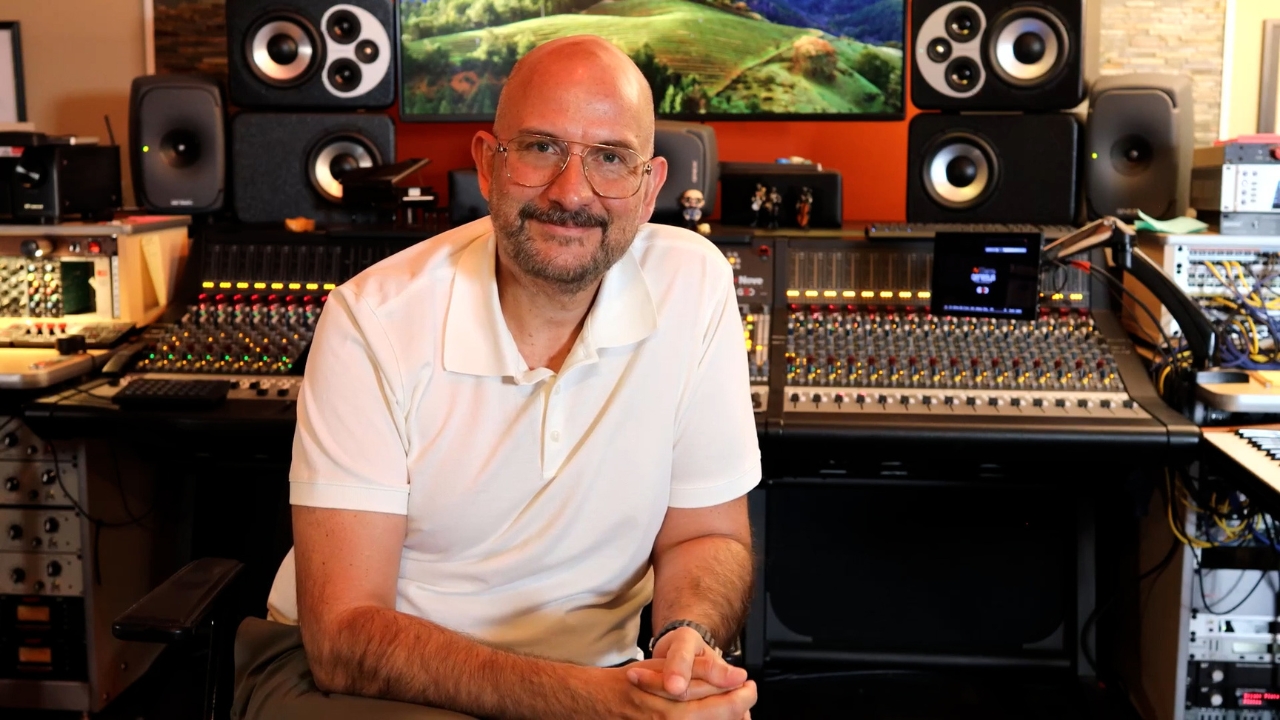
Grammy-winning engineer Carlos Rodgarman has spent the last two years doing something most producers only dream of: rebuilding the entire Michael Jackson catalogue into Dolby Atmos, track by track, stem by stem, on a Neve Genesys Black G3D at his Sherman Oaks, Los Angeles studio.
A Project Only One Person Could Lead
When Sony decided to prepare Michael Jackson’s catalogue for Dolby Atmos, the timing was driven by the biopic. Every time a film like this comes out, the catalogue surges. Sony wanted the music ready in the new immersive format to meet that demand. Umberto Gatica, who had worked alongside Michael and Quincy Jones since Thriller, through Bad and all the way to Invincible, was the only person with both the ear and the trust of the estate to reconstruct the original mixes. He also needed a highly specified Atmos studio, kitted out with top-flight equipment, and an expert immersive engineer. That’s where Rodgarman came in.
The project is more complex than a standard remix. The original multitrack tapes exist in the Sony vaults, but nobody ever printed full stems. The mixes were committed to tape and left there.
“What is in the vaults of Sony is all the multi-track tapes from the recording. But there’s no mix. So they just did the mix until it sounded great, then they printed the mix. But nobody printed the stems.”
So the process begins with Gatica, at his own studio, reconstructing each mix to match exactly what the world has always heard in stereo. The new stereo version then goes to Sony for approval. Once signed off, the stems come to Rodgarman, and the Atmos work begins.
A New Experience, Not a Replacement
Rodgarman and Gatica made a deliberate creative decision early on. The stereo mix always exists. It always will. So the Atmos version should be something genuinely new, not a cautious reproduction with a few sounds pushed to the sides.
“We decided, since the stereo is always going to be there, we’re going to create a new experience. We are taking chances. We’re not changing the essence. If a guitar was on the right, we’re not going to put it on the left. But we can be creative in how we separate things.”
Working through Off the Wall, Bad, Dangerous and beyond has also been an unexpected masterclass, watching how the production approach changed from Quincy Jones’s era of live sessions with the best players in the world, through the digital and sampling era of the later albums.
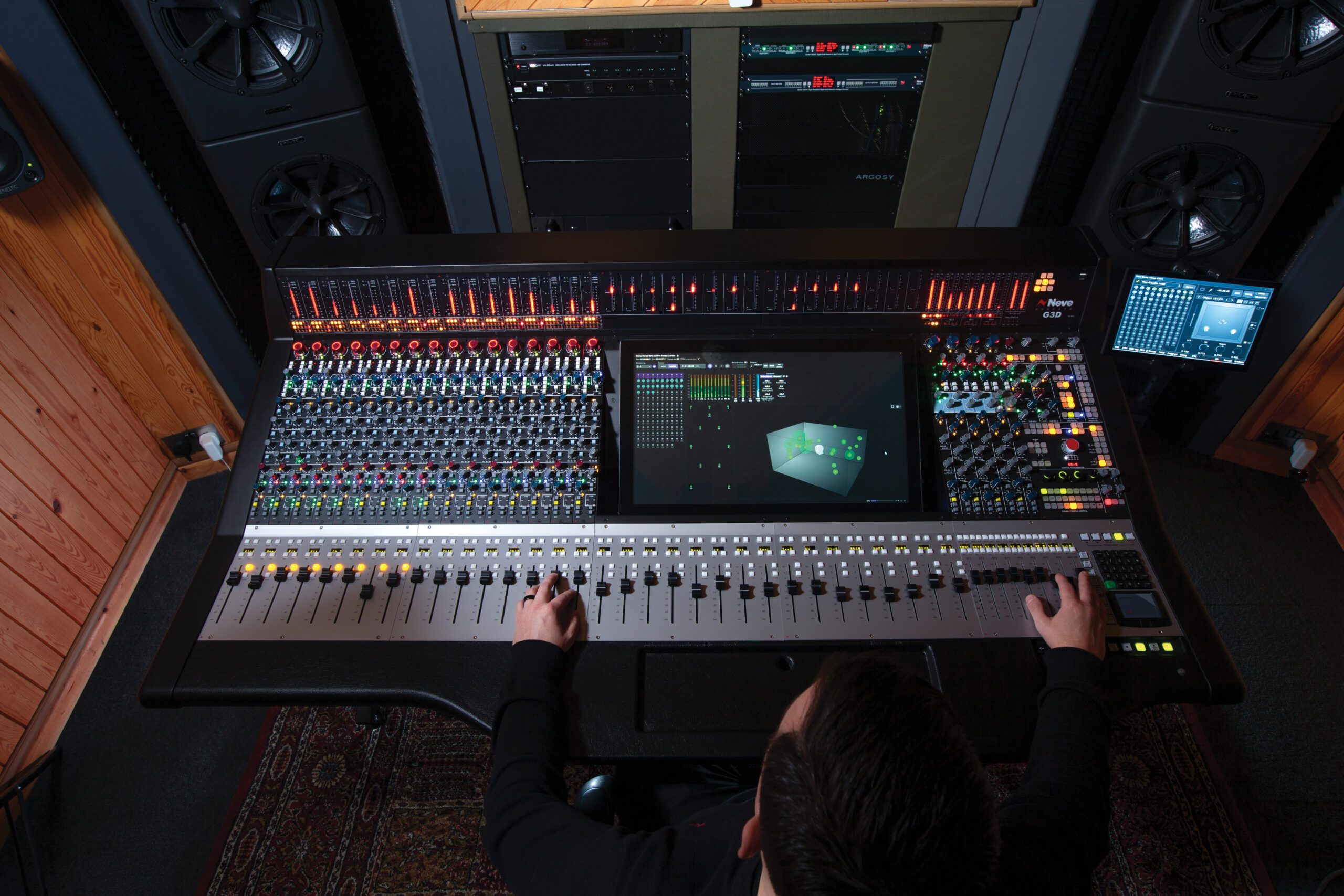
The Neve Genesys G3D
The Neve at the Centre of It All
Rodgarman has worked on a Genesys Black for years with artists such as Michael Buble, Pareli and Aaron Lazar. With the G3D upgrade, he can now integrate Atmos object-based mixing directly into the console workflow.
Stems come out of Pro Tools into the console for all analogue processing, then return as separate channels that form the Atmos mix. Outboard reverbs, including an AMS RMX16 to deliver period-specific reverb effects, are routed back into the system as individual objects. The stereo and Atmos mixes are handled simultaneously, in real time. A unique capability made possible with the Genesys G3D console.
“With the ability to integrate the Atmos in the workflow, being able to do the stereo mixing and the Atmos mixing all synced up and just control everything from the console, it’s been a blessing.”
The console’s analogue processing proved critical in ways that couldn’t be anticipated. On one unreleased track, a percussion element central to the groove had lost its impact through heavy processing. To bring it back to life, Rodgarman turned to the console EQ, as he explains:
“I put it on the console, cranked the 1k and the 110 on the EQ. It’s done. It just has it. I don’t know how to get what I get here in the box.”
That instinct to reach for the console runs through every session. Friends who come to hear the mixes are pointing out musical details, horn lines, piano parts, rhythmic figures they have never consciously registered before, buried in the original stereo image for forty-odd years. The Atmos format creates the space to hear them. The G3D makes it possible to place them there with precision, feel and speed that simply cannot be replicated in the box.
Bad and Dangerous are already available in Dolby Atmos on all major streaming platforms. The rest of the catalogue is approved and in the pipeline. For a project of this scale, with this much at stake, there was only ever one console for the job: The Neve Genesys G3D.
Learn more about Carlos Rodgarman.
Discover the Genesys G3D.
