
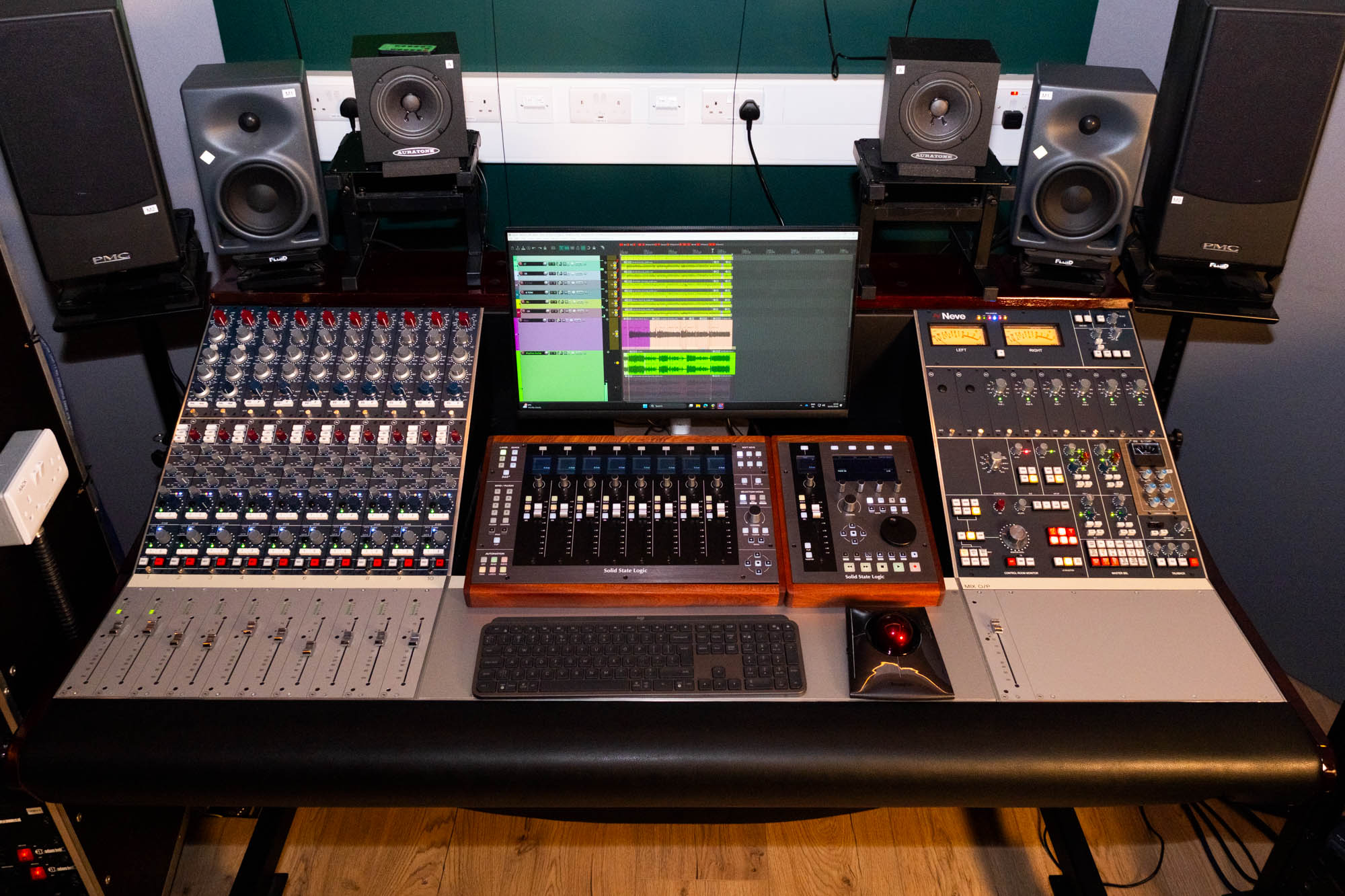
A console built for the world’s greatest studios turns out to be exactly what the next generation of engineers needs.
There is a version of audio education that goes like this: students spend three years learning software, then enter the industry and spend three more years unlearning habits. The focus on buttons and menus rather than ears and instincts. The gap between the classroom and the control room.
The Neve BCM closes that gap. Originally designed in 1969 as a tracking console for the world’s premier recording studios, it has found a second calling in education, and it is not difficult to understand why. In our latest film, we visited the Department of Midlands Media and Design at TUS Athlone, where Head of Department Mike O’Dowd and Music and Sound Engineering Co-Programme Coordinator Niall O’Connor made the case for the BCM as the most education-friendly console available today. Here is what they told us, and why it matters.
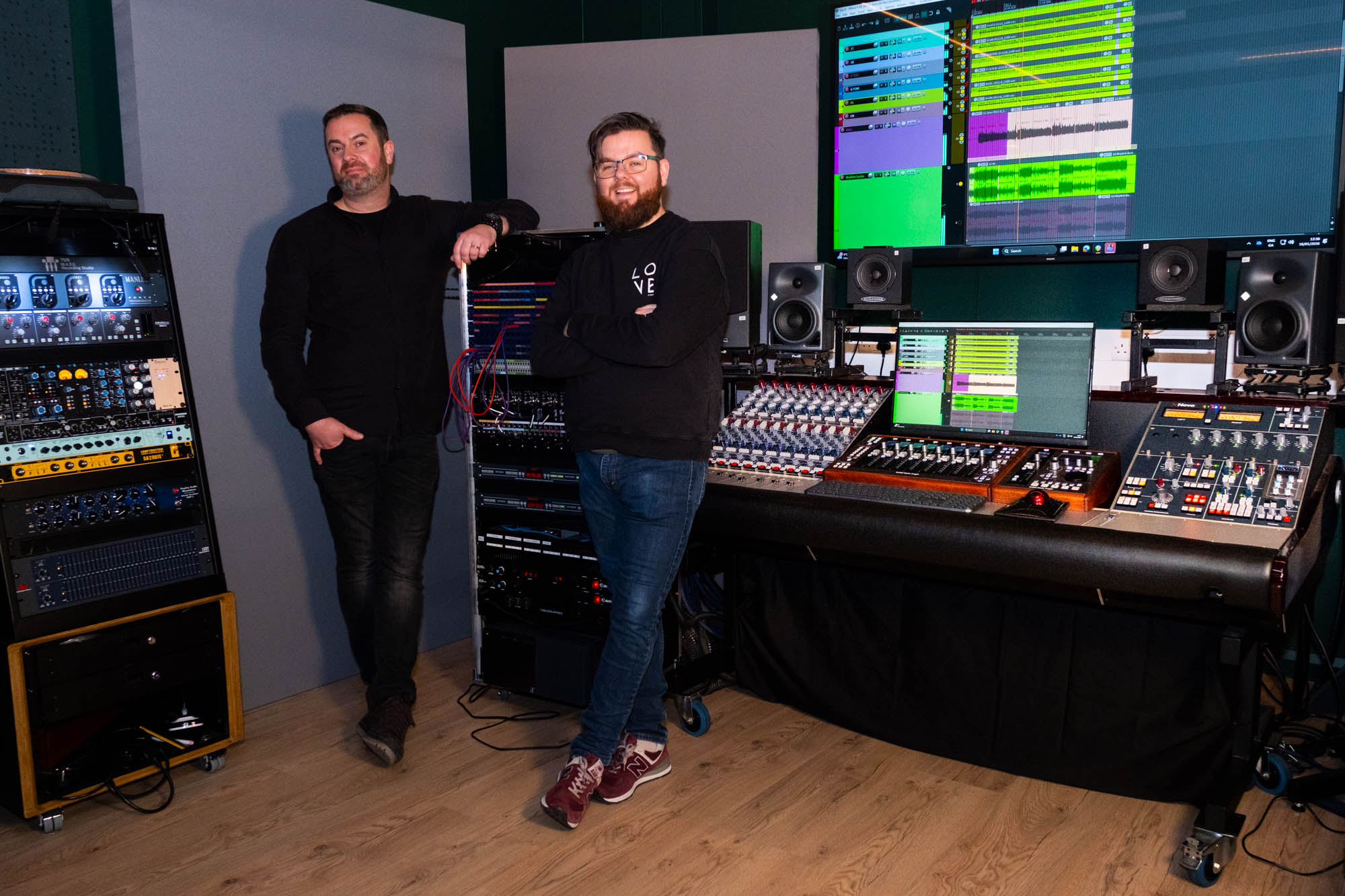
Mike O’Dowd and Niall O’Connor in front of the Neve BCM
1. It Teaches Signal Flow Without the Complexity
The most common trap in audio education is teaching students to operate equipment rather than to think like engineers. A console that hides its signal path behind layers of sub-menus and button combinations trains the wrong muscle. The BCM does the opposite.
Every stage of the signal path is visible, tactile, and logical. From the 1073 preamp module through the EQ, the routing, the fader and out through the mix bus, there is no point at which the console becomes unnecessarily complex. Students learn how audio actually works, not how a particular piece of software has chosen to represent it.
“At no point in even the signal flow of the BCM does it ever get unnecessarily complex for our students,” says Niall O’Connor. “We didn’t want our students to learn a series of buttons and knobs to press to make signal happen. We wanted them to learn how to become audio engineers.”
That is the distinction. The BCM is a teaching tool that never gets in the way of the lesson.
2. The Learning Curve Is Measured in Days, Not Months
Time is a constraint in every education programme. Students need to be operational quickly enough to spend the majority of their time practising, not troubleshooting. The BCM delivers on this in a way that few consoles at any level can.
The layout is intuitive. The controls behave as expected. Signal goes in, the desk responds immediately, and students can trust what they are hearing. There is no configuration overhead, no compatibility friction, no session setup before the session can begin.
Fourth year student William Morgan found this out quickly. As he explains:
“It really only took me a week to really be able to navigate it the way I like, and feel comfortable doing a session.”
For a student encountering a professional console for the first time, it is transformative.
Another student in the film, Elliot Thompson, summed it up plainly: “I like gear that kind of gets out of your way. With this desk, it’s just plug and play. Everything works exactly how you expect it to, sounds great, and you can just get to tracking or mixing and working on the music as opposed to troubleshooting for three hours before or during a session.”
3. Analogue Thinking Produces Better Engineers
There is a reason studios still invest in analogue consoles. It is not nostalgia. It is the way they shape decision-making. Working in analogue demands commitment. Choices are made in real time. Ears are engaged from the start of the session, not during a mixdown review.
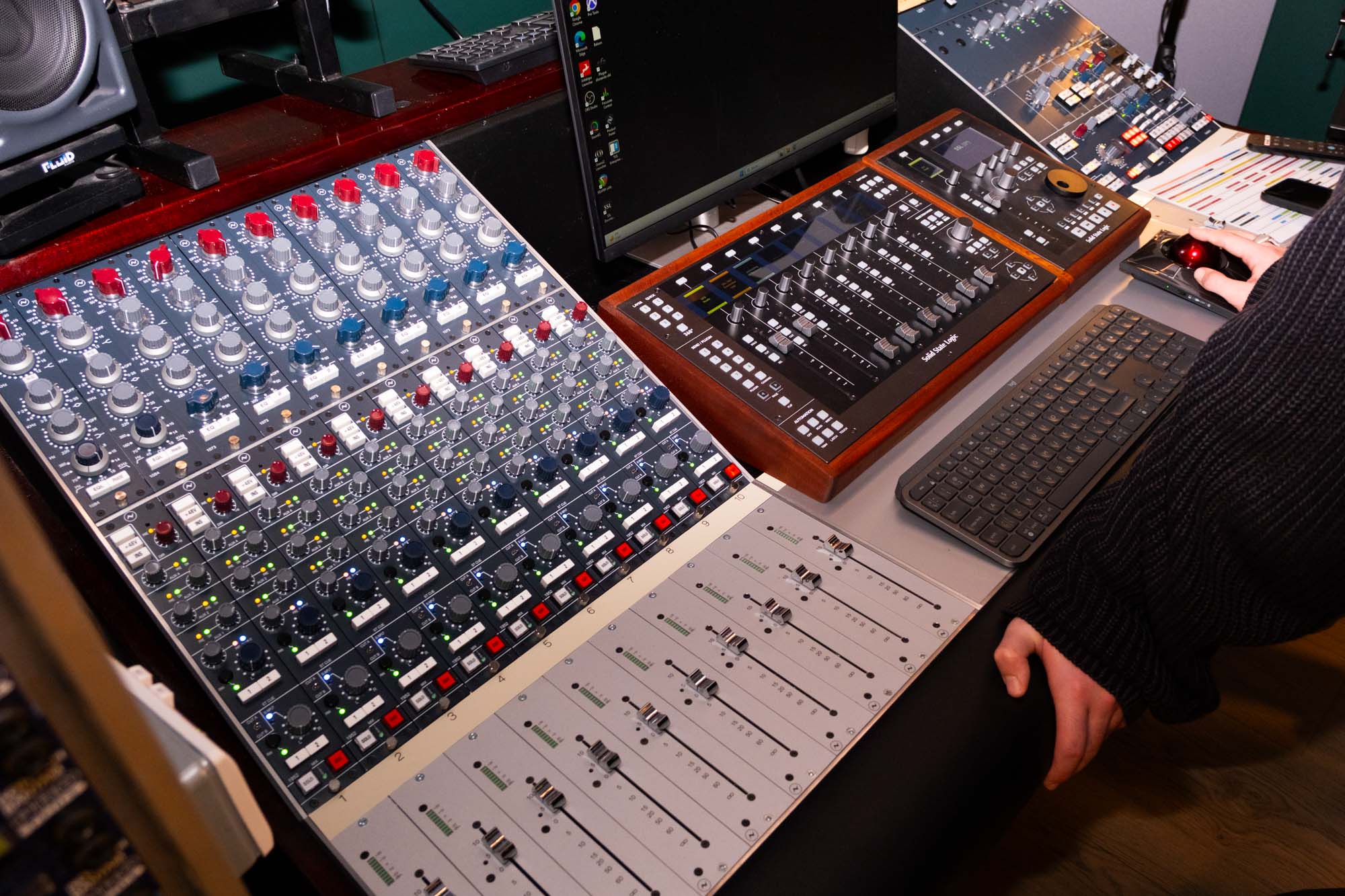
Students who learn on the BCM develop working habits that will serve them across any format, because they are learning to respond to sound, not to a screen. The physical nature of the desk reinforces this. Faders move, filters sweep, the needle on the VU meter follows the music. Physical changes to the console surface produce immediate, audible results.
“You can definitely feel the music in the room,” said student Rachel Concannon “As opposed to when you’re working on a DAW, you’ve usually got headphones on, you’re just sitting there focused. With analogue stuff, it’s a completely different ballgame.”
Second year student Steph Tompkins added: “I think it’s definitely a lot easier for me to do it physically on a desk. Just the way my brain works. The desk is there in front of you. It’s a lot less complex.”
These are not observations about preference. They are observations about cognition. Tactile learning and spatial awareness matter. The BCM respects that.
4. Build Quality Builds Confidence
An educational environment is demanding. Equipment is used by rotating cohorts of students across long days, back-to-back sessions, and varying levels of experience. Reliability is not a nice-to-have. It is an institutional requirement.
The BCM10 is built to a standard that was originally set by the demands of world-class commercial studios. Every component is chosen for longevity. Every connection is transformer-balanced. The controls are weighted, chunky and satisfying to use. Nothing feels fragile.
This matters practically. A console that goes down in an education facility does not just cause inconvenience. “If our gear goes down, we lose 300 students for a week,” says O’Connor. “It’s a lot of time.” The BCM simply does not go down.
It also matters psychologically. Students working on equipment that feels substantial, that responds with authority, perform differently. There is a confidence that comes from the build quality of the BCM that cheaper alternatives cannot replicate.
O’Dowd finds the build quality reassuring:
“The build quality gives you reassurance. The big chunky feel to everything across an entire console. There is just something about it from a tactile perspective.”
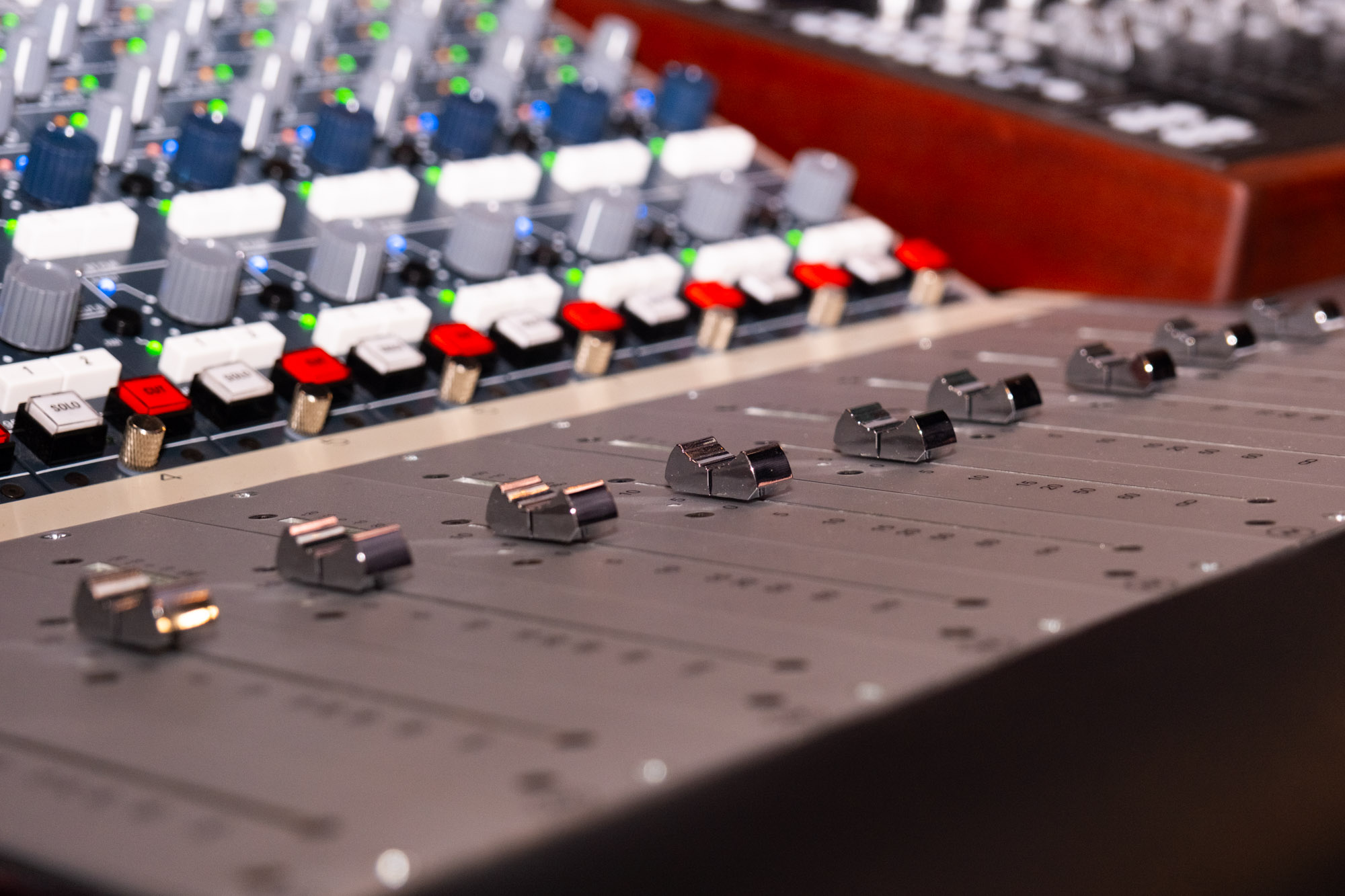
The Neve BCM is renowned for its build quality
5. The Sound Is Unmatched
Students need to hear what great sound actually sounds like. If the console is colouring the signal in ways that are unpredictable, or delivering results that do not translate outside the room, the learning is distorted before it starts. With the BCM, the sound is the reference.
The class-A topology, transformer-balanced design and hand-wound inductor EQ produce the Neve character that has defined records for five decades. Push the preamp and you get harmonic saturation. Dial in the 1073 high-pass filter and the low end tightens with a clarity that plug-ins approximate but rarely match. It always sounds good. It always sounds like itself.
“The Neve is unwavering in the quality it delivers for us,” says O’Connor.
“If I put a microphone in and it sounds bad, it’s probably the way the microphone was set up. But the Neve, every time, no matter what instrument we put in front of it, it sounds really good.”
O’Dowd has his own favourite feature: “I always love just going into the red, really getting that analogue bigness. That big, crunchy kind of bigness. That whole Neve sound.”
Students who learn on a BCM graduate with ears calibrated to a world-class standard. That is an advantage that follows them through their careers.
6. The Modular Design Grows With the Programme
No two education programmes have identical requirements. A programme focused on music production has different needs from one centred on post-production or live sound. The BCM10 accommodates this through a genuinely modular architecture that allows institutions to configure the console around their curriculum rather than building the curriculum around the console.
Channel modules can be specified as 1073 Classic, 1073N, or 1084, each bringing a different EQ palette to the desk. Two Neve 2264 Diode-bridge compressors are mounted into the desk as standard, but any compatible 500 series module can be fitted here as a mixbus processor, a point highlighted by O’Dowd: “The desk comes fully loaded with the two 2264 units and they’re absolutely stunning compressors,” he explains. “From a fairly early point, we made the decision to move them out of the 500 slots there in the master section into their own 500 series slots in the rack. We put in an alternative stereo bus compressor in the BCM, which, again, is the wonderful flexibility about the console.”
This flexibility allows departments to expand and adapt their processing chain over time. The producer section, available as an optional addition, transforms the console layout entirely, placing the master section at the centre and creating a collaboration-ready workspace.
At the Athlone campus, O’Dowd was drawn specifically to the BCM’s expandability when the programme’s previous console began to show its age. The ten-channel core count suited the space, while the patchbay and outboard preamps meant the rig could keep growing.
“Students sit right in the middle of the console,” he says of the producer section configuration. “Channels to the left, master section to the right, the screen right there. It’s a beautiful ecosystem. All hands on, straightforward, easy to use.”
A console that adapts is a console that stays relevant. For an education facility planning years ahead, that is exactly the right investment.
For O’Dowd, the verdict is clear:
“I’ve been in education for quite a bit of time now. At this stage, it’s easily the most education-friendly console I’ve encountered. 100%.”
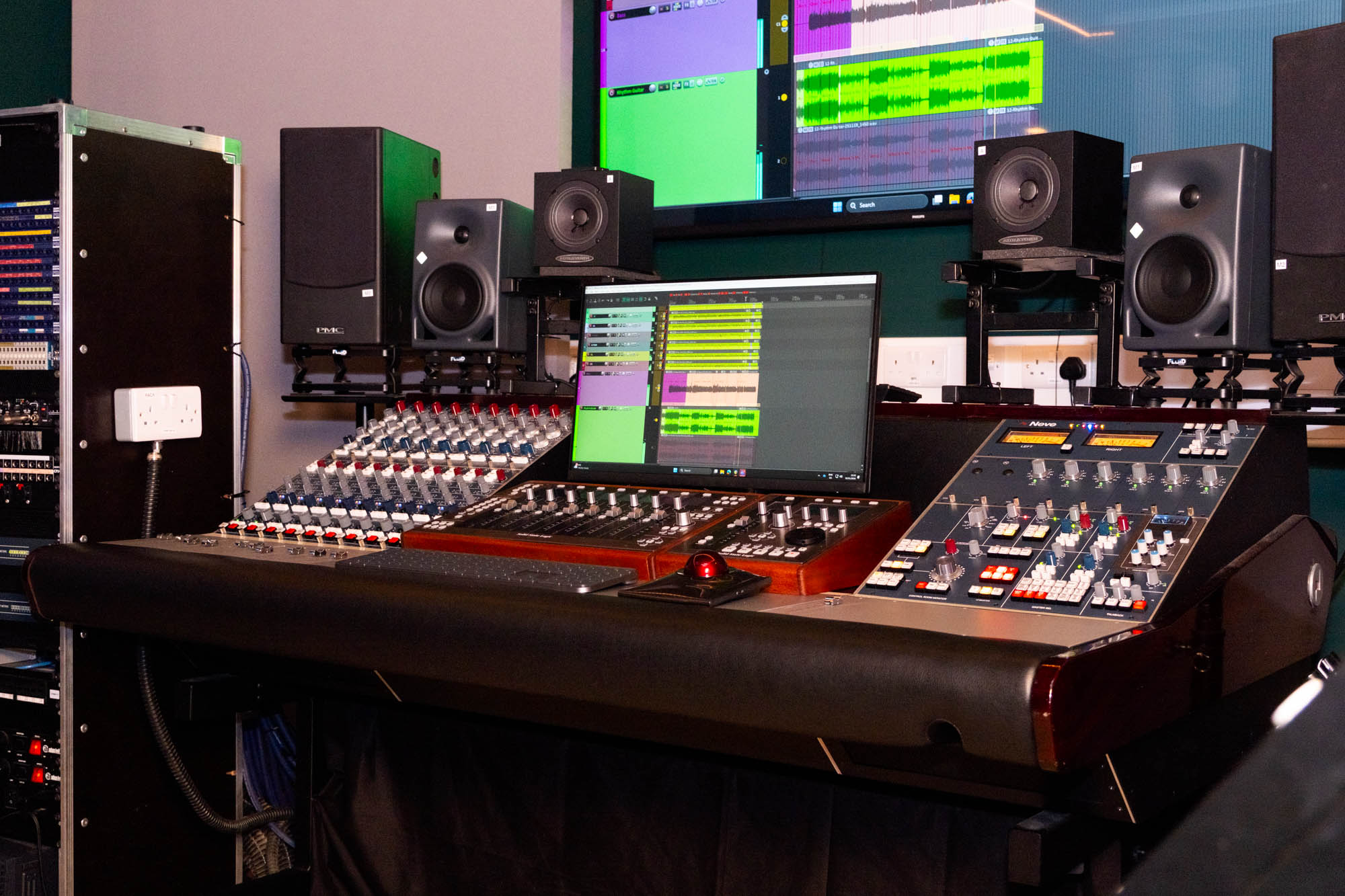
The Neve BCM: The perfect console for education programmes
Watch the full film to hear more from Mike O’Dowd and Niall O’Connor, and to see the BCM in action at the Department of Midlands Media and Design at TUS Athlone.
Learn more about the Neve BCM on our website.
